Fiddle-leaf fig — Ficus lyrata
Fiddle-leaf figs have a reputation for being dramatic. That's not wrong, but the reasons are specific: they hate being moved, they want consistent water, and they need real light — not "near a window." Once the environment is stable, they grow aggressively for years.
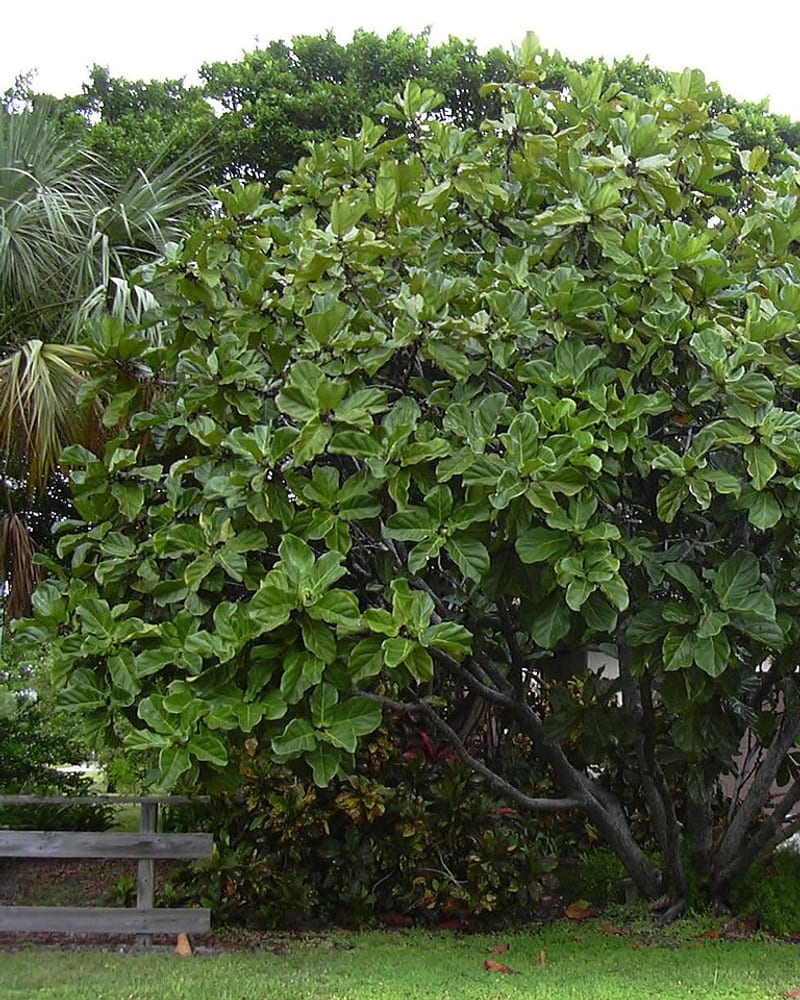
Quick care specs.
| Parameter | Value |
|---|---|
| Watering | Every 8 days (summer), 14 days (winter) |
| Light | Bright indirect only — no direct afternoon sun |
| Lux range | 1500–3000 |
| Humidity | 40–60% (average room humidity is fine; below 30% causes brown edges) |
| Temperature | 18–24°C; avoid drafts and temperature swings over 5°C |
| Toxicity | Mildly toxic — calcium oxalate crystals irritate mouth and GI |
| Difficulty | fussy |
Watering guide.
Water thoroughly — enough that water runs out the drainage hole — then wait until the top 2–3 cm of soil is dry before the next watering. In a standard 20 cm pot with a plastic liner and bright indirect light, that usually lands at 7–10 days in summer and 10–14 days in winter. Use room-temperature water; cold tap water can shock the roots and cause leaf drop within 48 hours.
Brown spots in the middle of leaves almost always mean inconsistent watering — long dry spells followed by a flood. Brown crispy edges mean low humidity or salt buildup; flush the soil with plain water once a month to clear accumulated fertilizer salts. For a full schedule tailored to your pot size and room, use the watering schedule generator.
Light requirements.
Fiddle-leaf figs want 1500–3000 lux for most of the day. In practical terms: within 1–2 metres of a south or east-facing window (northern hemisphere) or north / east-facing (southern hemisphere). A room that feels "bright but not sunny" to you is often only 500–800 lux — not enough. If you're unsure, the light requirement matcher estimates lux from window direction and distance.
Signs of too little light: slow growth, smaller new leaves, leaning toward the window. Signs of too much direct sun: bleached patches on upper leaves, crispy tips. Rotate the plant a quarter turn every 2–3 weeks so growth stays symmetrical. Don't move it between rooms — they acclimate slowly and often drop 3–5 leaves after a location change.
Common problems.
| Symptom | Cause | Fix |
|---|---|---|
| Brown spots in middle of leaf | Inconsistent watering (drought then flood) | Water on a fixed schedule; check soil every 3 days |
| Crispy brown edges | Low humidity or salt buildup in soil | Flush soil with plain water monthly; group with other plants |
| Dropping lower leaves | Location change, cold draft, or root rot | Check roots; stabilise location and temperature |
| Yellow leaves | Over-watering — soggy soil for 3+ days | Let soil dry 50–70%; repot if roots are mushy |
| Leaning heavily to one side | Insufficient or one-directional light | Rotate 90° every 2–3 weeks; move closer to window |
| Sticky residue on leaves | Scale or mealybugs | Wipe with diluted isopropyl alcohol; repeat weekly for 3 weeks |
Propagation.
Stem cuttings root in water, but success rate is lower than pothos or monstera — expect 40–60%. Take a 15–20 cm cutting with 2–3 nodes, remove lower leaves, and place in a glass of water in bright indirect light. Change water every 5 days. Roots typically appear at 3–6 weeks; transplant to soil when roots are 5 cm long.
Air layering has a higher success rate (around 80%) and is the preferred method for mature plants. Wrap a wounded node with damp sphagnum moss and plastic film; roots form in 6–8 weeks. The RHS recommends air layering for all ficus species over stem cuttings.
FAQ.
Why does my fiddle-leaf fig drop leaves after I bring it home?
Location change stress. New plants are acclimating to different light, humidity, and water schedules than the nursery. Expect 3–5 leaves to drop in the first 2–3 weeks; hold off on repotting for at least 30 days.
Can I put it in direct sunlight?
Morning sun for 2–3 hours is fine. Direct afternoon sun through a south-facing window will bleach and scorch leaves within a week. Bright indirect light is the safe default.
How often should I fertilize?
Every 4–6 weeks in spring and summer with a balanced liquid fertilizer diluted to half strength. Stop fertilizing from late autumn through winter. Over-fertilizing causes salt buildup and crispy leaf edges.
When should I repot?
Every 2–3 years, or when roots circle the pot or grow out the drainage holes. Go up one pot size only (5 cm wider). Repotting in spring gives the plant a full growing season to recover.