Peace lily — Spathiphyllum wallisii
The peace lily tells you when it needs water by collapsing dramatically, then recovers within an hour. That theatrical signal is useful, but relying on it stresses the roots over time. Aim for steady 5-8 day intervals instead.
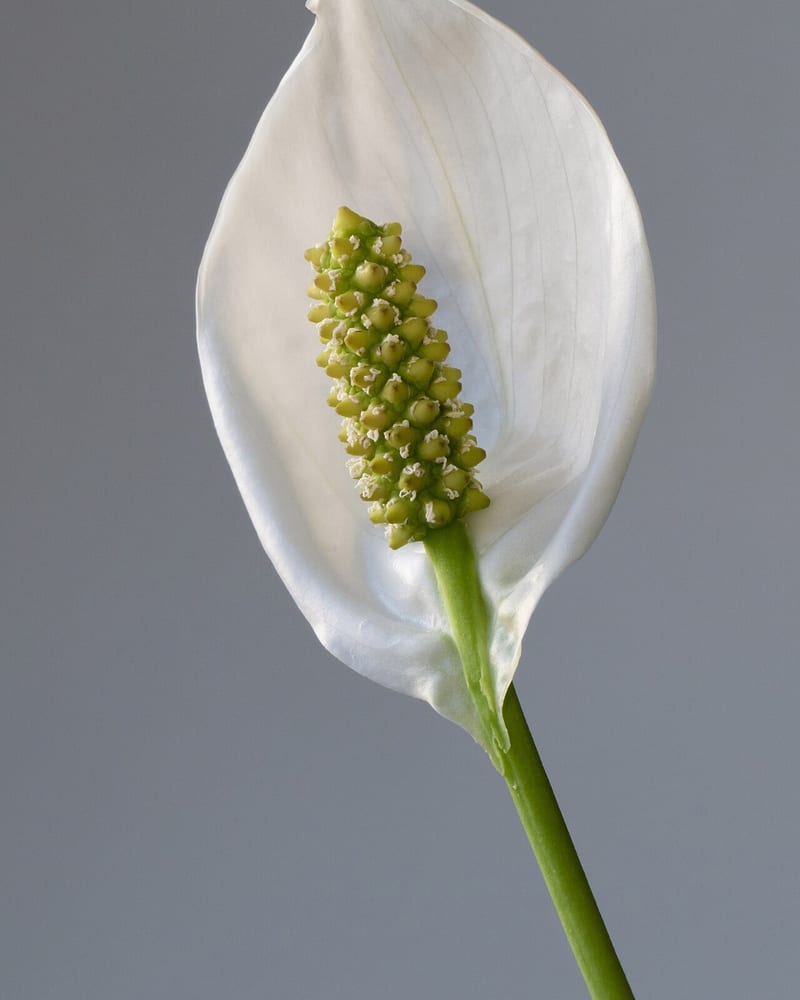
Quick care specs.
| Parameter | Value |
|---|---|
| Watering | Every 6 days (summer), 10 days (winter) |
| Light | Low to medium indirect — tolerates shade; avoid direct afternoon sun |
| Lux range | 400–1200 |
| Humidity | 50%+ preferred; tolerates 40% with some tip browning |
| Temperature | 18-24°C; avoid drafts under 15°C |
| Toxicity | Toxic to cats and dogs (calcium oxalate) |
| Difficulty | medium |
Watering guide.
Peace lilies have thin, fleshy leaves and shallow roots, so they drink more often than most common houseplants. In a 6-inch plastic pot with medium light, 5-8 days in summer is typical; terracotta drops that to 4-6. Winter intervals stretch to 8-10 days as the plant slows. The "just let it wilt" method works once or twice but bruises leaf tips and weakens the crown over a season, according to RHS cultivation notes.
Bottom-watering for 15 minutes every other watering reduces the salt buildup that causes leaf edges to brown. Top-water monthly to flush minerals. If you want an exact day count for your pot and light combination, the watering schedule generator computes it from the same RHS baselines.
Light requirements.
Peace lilies evolved on rainforest floors, so they handle low light better than almost any flowering houseplant. A north-facing window or 2-3 m back from an east/west window lands in the 400-1200 lux sweet spot. They flower reliably around 800 lux; below 300 lux you get leaves but no spathes for months.
Direct afternoon sun scorches the leaves within days — pale yellow patches that turn papery. If yours stopped flowering, move it 60 cm closer to the window before blaming fertiliser. Use the light requirement matcher to confirm your spot reads within range.
Common problems.
| Symptom | Cause | Fix |
|---|---|---|
| Dramatic droop, leaves recover after watering | Soil fully dry, roots briefly collapse | Water now; reduce interval by 1-2 days next cycle |
| Brown, crispy leaf tips | Fluoride/chlorine in tap water or salt buildup | Switch to filtered or rainwater; flush soil monthly |
| Yellow lower leaves, soggy soil | Over-watering, early root rot | Stop watering until top 5 cm dry; check drainage holes |
| No flowers for 6+ months | Light too low (under 300 lux) | Move closer to a bright indirect window |
| Green flowers instead of white | Too much light, or ageing spathe | Normal ageing; shift slightly back from window if new blooms emerge green |
| Black leaf edges | Cold draft or water on crown | Relocate from window in winter; water at soil level only |
Propagation.
Peace lilies propagate by division, not cuttings. At repotting time (every 2-3 years in spring), tip the rootball out and look for natural clumps — each crown has its own set of roots. Pull or cut clumps apart, ensuring at least 2-3 leaves per division. Replant in fresh potting mix and water lightly. Recovery takes 2-4 weeks; expect a pause in flowering while roots rebuild.
FAQ.
Is a peace lily dangerous to cats or dogs?
Yes. Calcium oxalate crystals in the sap cause oral irritation, drooling, and vomiting if chewed. AVMA lists it as toxic but rarely fatal — most pets spit it out fast. Keep it above jumping height if you have cats.
Why does my peace lily droop so dramatically?
It is the signature behaviour — thin leaves lose turgor fast when soil dries. Recovery within 1-2 hours of watering is normal. Chronic drooping even after watering means root rot; check for mushy roots.
Can I put it in the bathroom?
Yes, bathrooms with a window are ideal: warm, humid, moderate light. A windowless bathroom needs supplemental light above 300 lux for at least 6 hours daily.
How often should I fertilise?
Every 4-6 weeks during spring and summer at half strength with a balanced liquid feed. Skip winter. Over-fertilising is the second-most common cause of tip burn after tap water.