Snake plant — Dracaena trifasciata
Snake plants actively prefer drought. The leaves are water reservoirs — thick, fleshy, and sealed — so they can go a month between waterings without stress. Root rot from over-watering is the single common killer; everything else, they shrug off.
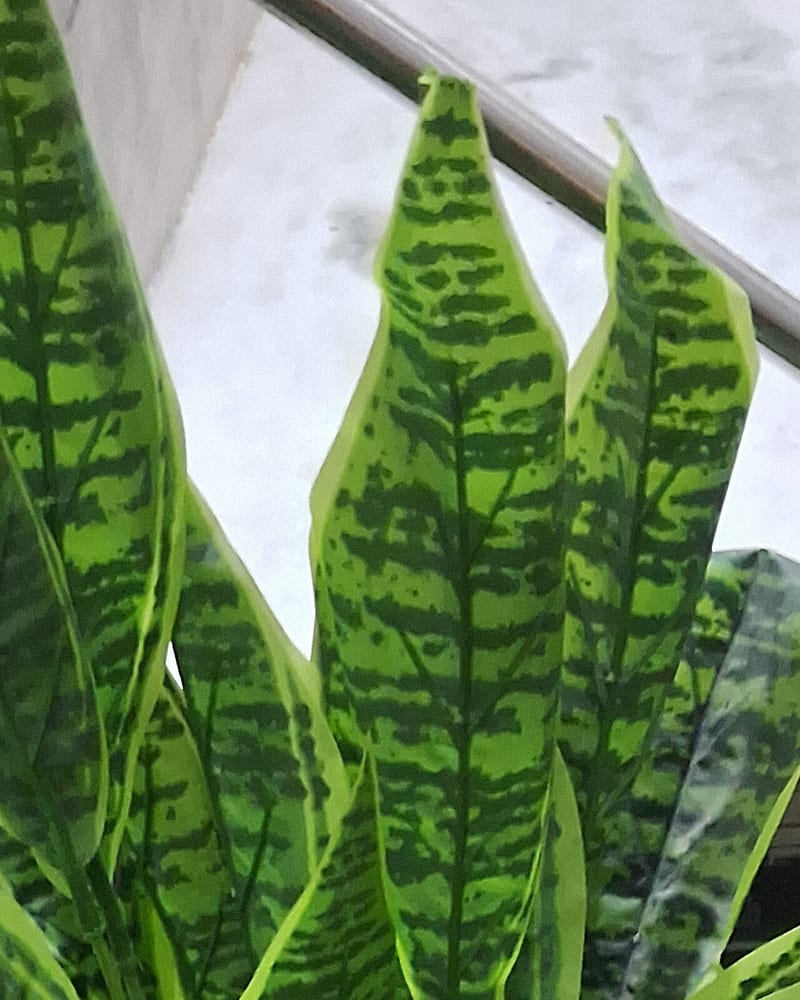
Quick care specs.
| Parameter | Value |
|---|---|
| Watering | Every 21 days (summer), 35 days (winter) |
| Light | Very low to bright indirect — extremely flexible |
| Lux range | 200–2000 |
| Humidity | Any — tolerates 15–80% |
| Temperature | 15–29°C; damage below 10°C |
| Toxicity | Mildly toxic — saponins cause nausea if chewed |
| Difficulty | easy |
Watering guide.
Wait until the soil is bone-dry, then water thoroughly. For most indoor setups this is every 2–3 weeks in summer and every 4–5 weeks in winter. In a cool room (under 18°C) or very low light, winter intervals can stretch to 6 weeks. When you water, pour until it drains out the bottom and empty the saucer — roots sitting in water will rot within a week.
Soft, mushy, or folded leaves at the base mean root rot is already underway. Pull the plant out, trim mushy roots, and repot in a dry gritty mix. Crispy leaf tips mean over-fertilizing or fluoride in tap water — flush the soil with distilled water once a month. See the watering schedule generator for intervals by pot and light level.
Light requirements.
Snake plants accept 200–2000 lux. In dim corners (below 300 lux) growth is glacial — maybe one new leaf per year — but the plant stays alive indefinitely. In bright indirect light (1000–1500 lux) they produce 3–6 new leaves a year and the variegation on cultivars like Laurentii stays strong. Direct afternoon sun through glass is tolerated but can fade the yellow edges.
For an actual lux estimate at your plant's location, try the light requirement matcher. Snake plants are the most forgiving plant on this site for low-light situations — bathrooms, hallways, and windowless offices all work.
Common problems.
| Symptom | Cause | Fix |
|---|---|---|
| Soft, folded leaves at base | Root rot from over-watering | Unpot, cut mushy roots, repot in dry gritty mix |
| Yellow leaf tips | Over-fertilizing or fluoride in tap water | Flush with distilled water monthly; skip fertilizer for 3 months |
| Leaves leaning outward | Root-bound or uneven light | Repot in slightly larger pot; rotate plant quarterly |
| Brown crispy tips | Physical damage or low humidity (rarely a cause) | Trim cleanly at 45°; usually cosmetic only |
| No new growth for 12+ months | Too little light or too cold | Move to 500+ lux; check temperature above 15°C |
| Brown spots with yellow halo | Fungal infection from cold water on leaves | Water at soil level; avoid wetting leaves |
Propagation.
Two options: rhizome division and leaf cuttings. Division is faster and preserves variegation — at repotting, split the root clump into 2–4 pieces, each with a fan of leaves and attached rhizome. Pot separately in dry mix and water lightly for the first month.
Leaf cuttings work but strip variegation — cuttings from Laurentii (gold edges) revert to plain green. Cut a leaf into 10 cm sections, let them callus for 2 days, then bury 3 cm deep in moist soil. Roots form in 6–8 weeks, new pups at 4–6 months. Use division if you want to keep the variegated look.
FAQ.
Do snake plants really clean the air?
The NASA Clean Air Study found snake plants remove formaldehyde and benzene at low rates, but at realistic houseplant densities (one plant per room), the effect on actual indoor air quality is negligible. Keep them for aesthetics and ease of care, not air purification.
Can I leave it for a month while on holiday?
Yes. Water thoroughly before you leave and place it out of direct sun. A healthy snake plant handles 4–6 weeks of drought without any stress. Don't ask someone to water it — that's how most snake plants die while their owners are away.
Is it safe for cats and dogs?
No. Snake plants contain saponins that cause nausea, vomiting, and drooling if chewed. The effects are usually mild and self-resolving, but the AVMA still lists it as toxic. Pet-safe alternatives: spider plant, moth orchid.
Why is my snake plant not growing?
Two common causes: too little light (under 300 lux) or dormancy. Snake plants slow down in winter regardless of indoor temperature. If there's been zero growth for 12+ months even in summer, move it to a brighter spot.