ZZ plant — Zamioculcas zamiifolia
The ZZ plant stores water in underground rhizomes — thick, potato-like structures that make it one of the most drought-tolerant houseplants available. It's genuinely harder to kill than any other common indoor plant. The main risk is attention, not neglect.
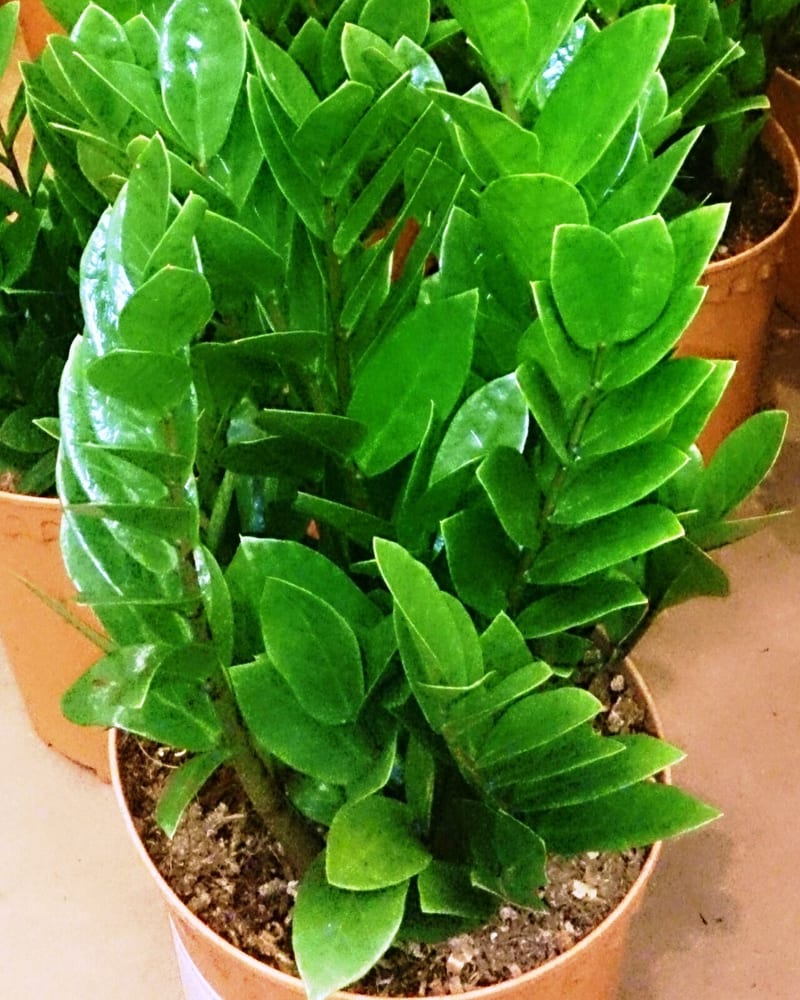
Quick care specs.
| Parameter | Value |
|---|---|
| Watering | Every 18 days (summer), 28 days (winter) |
| Light | Very low to bright indirect — tolerates office fluorescents |
| Lux range | 200–1000 |
| Humidity | Any — tolerates 20–80% |
| Temperature | 18–24°C; damage below 10°C |
| Toxicity | Toxic — calcium oxalate in all parts |
| Difficulty | easy |
Watering guide.
ZZ plants are drought-adapted. The underground rhizomes store enough water to keep the plant alive for 4–6 weeks without watering. In practical terms: water when the soil is completely dry — usually every 2–3 weeks in summer, every 3–4 weeks in winter. When you water, soak thoroughly and empty the saucer.
If you're not sure whether to water, don't. The plant tolerates under-watering far better than over-watering. Yellow or mushy stems at the base mean rhizome rot — pull the plant out, cut away any soft rhizomes, and repot in dry gritty mix. The watering schedule generator gives intervals matched to pot size and light.
Light requirements.
ZZ plants survive in 200 lux (a dim hallway, deep interior of a living room) and thrive at 500–1000 lux. They don't want direct sun — even morning sun through glass can yellow the leaves. The reason they work so well in offices is that fluorescent ceiling light of 300–500 lux is enough to maintain them indefinitely.
In very low light, expect slow growth — one or two new stems per year rather than four or five. No colour fading or leaf drop, just slower expansion. The light requirement matcher confirms whether your spot is in the ZZ comfort range.
Common problems.
| Symptom | Cause | Fix |
|---|---|---|
| Yellow stems from base up | Rhizome rot from over-watering | Unpot, cut away mushy rhizomes, repot dry |
| Drooping stems | Severe under-watering (rare) or root disturbance | Water thoroughly; recovers in 1–2 weeks |
| Yellow leaves only at tips | Tap water fluoride or chloride buildup | Use filtered or rainwater; flush soil monthly |
| No new growth for 6+ months | Too little light or too cold | Move to brighter spot; check temperature above 15°C |
| Stems snapping at soil line | Physical damage or extreme rot | Cut clean; healthy rhizomes will push new stems |
| Mealybugs in leaf joints | Common pest in dry rooms | Wipe with diluted isopropyl alcohol weekly for 3 weeks |
Propagation.
ZZ plants propagate two ways: rhizome division and leaf cuttings. Division is fastest — at repotting time, split the root mass into 2–4 clumps, each with at least one stem and healthy rhizome. Pot separately; each piece grows as a full plant immediately.
Leaf cuttings work but take patience. Pluck a single leaflet with its small petiole, let it callus for a day, then bury the petiole in moist soil. A new rhizome forms in 3–6 months, a first stem in 9–12 months. Slow, but a single mature plant can produce dozens of cuttings.
FAQ.
Is ZZ plant really as tough as people say?
Yes. The rhizomes store enough water for 4–6 weeks without watering, and the plant tolerates light down to 200 lux. The main failure mode is over-watering — people assume it needs weekly care and drown it. Neglect actively helps.
Is the sap dangerous?
ZZ plant contains calcium oxalate crystals in all parts. Skin contact is usually fine but can irritate sensitive people. If you cut stems, wash hands afterwards. Ingestion by pets or children causes mouth and throat irritation — keep out of reach.
How often should I fertilize?
Very lightly. Once every 2–3 months in spring and summer with a balanced liquid fertilizer at quarter strength. ZZ plants store nutrients in rhizomes and don't need much. Over-fertilizing causes brown leaf tips.
When should I repot?
Every 3–4 years or when rhizomes push the plant out of the pot. Use a gritty cactus-style mix with extra perlite for drainage. Terracotta pots work well because they wick excess moisture. Repot in spring for best recovery.